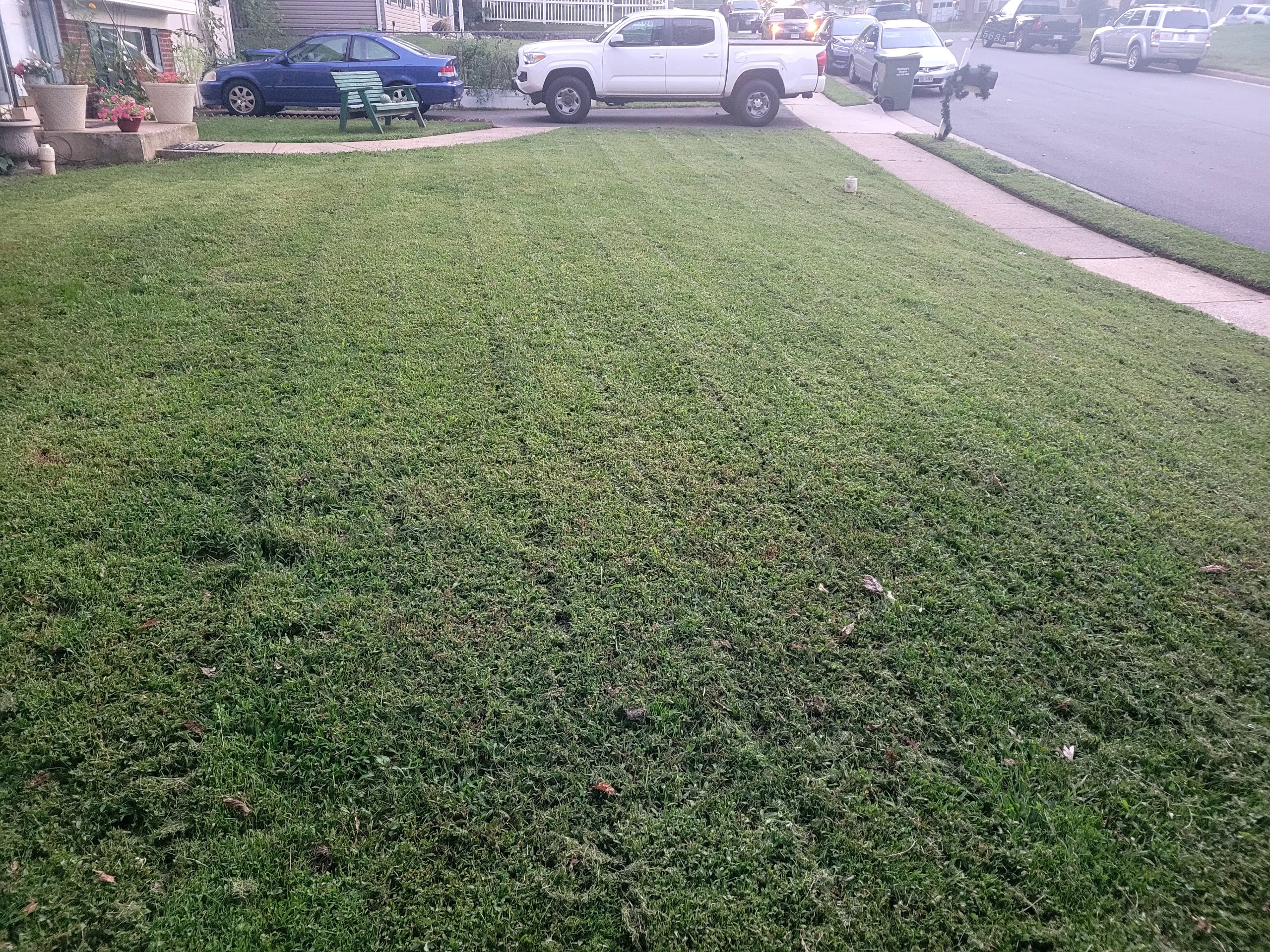
Fall is actually one of the most important times for lawn care. While many homeowners focus on spring lawn care, the work you do in autumn sets the foundation for a beautiful lawn next year. Cool-season grasses in Northern Virginia experience their most vigorous growth in fall, making it the ideal time for critical maintenance tasks.
Why Fall Lawn Care is Critical
Optimal Growing Conditions
Fall provides ideal conditions for cool-season grasses:
Moderate temperatures (60-75°F)
Adequate moisture from fall rains
Less weed competition
Reduced disease pressure
Strong root development before winterRoot Development Focus
While top growth slows in fall, roots continue growing until soil temperature drops below 40°F. This extended root growth period:
Strengthens grass for winter survival
Builds nutrient reserves
Improves drought tolerance for next summer
Enhances overall lawn healthEssential Fall Lawn Care Tasks
1. Fall Aeration (September-October)
Why It's Crucial:
Summer foot traffic and heat stress compact soil. Fall aeration:
Relieves soil compaction
Improves oxygen flow to roots
Enhances water and nutrient absorption
Creates ideal conditions for overseedingBest Practices:
Use core aerator (not spike aerator)
Aerate when soil is moist but not saturated
Make 2-3 passes for heavily compacted areas
Leave soil plugs on lawn to decompose
Ideal timing: Early September in Northern Virginia2. Overseeding (September-Early October)
Why Overseed in Fall:
Optimal germination temperatures
Less weed competition
Adequate moisture
Grass establishes before winter
Thickens thin areas
Introduces improved grass varietiesOverseeding Process:
1. Mow Short: Cut grass to 2 inches before seeding
2. Aerate First: Creates seed-to-soil contact
3. Choose Quality Seed: Select varieties suited to your conditions
4. Apply Evenly: Use spreader for uniform coverage (5-8 lbs per 1,000 sq ft)
5. Light Topdressing: Apply 1/4 inch compost or topsoil
6. Water Consistently: Keep top inch of soil moist until germination
7. First Mowing: Wait until new grass reaches 3-4 inches
Seed Selection for Northern Virginia:
Turf-type tall fescue (most common)
Kentucky bluegrass (sun areas)
Fine fescue (shade areas)
Perennial ryegrass (quick germination)3. Fall Fertilization (September-November)
The Most Important Fertilization of the Year
Fall fertilization:
Promotes root growth
Builds carbohydrate reserves
Enhances winter hardiness
Provides nutrients for spring green-up
Improves disease resistanceFertilization Schedule:
Early Fall (September):
Balanced fertilizer (e.g., 20-20-20)
Supports active growth and recovery
Apply after aeration and overseedingLate Fall (November):
High-nitrogen "winterizer" fertilizer
Slow-release formula
Applied before first hard freeze
Feeds roots through winterApplication Tips:
Water in if no rain within 24 hours
Use spreader for even distribution
Avoid fertilizing frozen ground
Follow label rates precisely4. Weed Control
Pre-Emergent Herbicide (Late August-September):
Prevents winter annual weeds
Targets chickweed, henbit, poa annua
Apply before soil temperature drops below 70°F
Wait 4-6 weeks after overseeding before applyingPost-Emergent Herbicide (September-October):
Most effective time for broadleaf weed control
Targets dandelions, clover, plantain
Weeds absorb herbicide into roots for winter
Apply when temperatures are 50-80°F
Avoid application if frost expected within 24 hours5. Leaf Management
Why Leaf Removal Matters:
Prevents grass smothering
Reduces disease risk
Allows sunlight penetration
Prevents matted, dead areasLeaf Management Strategies:
Option 1: Mulching
Mow over thin leaf layer
Chops leaves into small pieces
Adds organic matter to soil
Only works with light leaf coverageOption 2: Removal
Rake or blow heavy leaf accumulation
Compost leaves separately
Essential for thick leaf layers
Prevents snow mold and diseaseOption 3: Combination
Mulch light layers
Remove heavy accumulations
Most practical for many homeownersBest Practices:
Don't let leaves sit for weeks
Remove before first snow
Multiple light removals better than one heavy cleanup
Keep grass visible through leaves6. Mowing Adjustments
Early Fall (September-October):
Maintain 3-3.5 inch height
Continue regular mowing schedule
Mow over light leaf coverage
Keep blades sharpLate Fall (November):
Gradually lower to 2.5-3 inches for final mowing
Don't scalp the lawn
Final cut prevents snow mold
Remove any remaining leaves7. Soil Testing
Fall is Ideal for Soil Testing:
Results guide spring fertilization
Time to apply lime if needed
Identifies nutrient deficiencies
pH adjustments work over winterWhat to Test:
pH level (target 6.0-7.0)
Nitrogen, phosphorus, potassium
Organic matter content
Soil texture and compositionLime Application:
If pH below 6.0, apply lime in fall
Lime takes months to adjust pH
Fall application perfect timing
Retest in 2-3 years8. Irrigation System Winterization
Protect Your Investment:
Blow out irrigation lines before first freeze
Drain backflow preventer
Insulate above-ground components
Turn off water supply
Schedule professional winterization if neededTiming:
Before first hard freeze (typically late October-November)
Monitor weather forecasts
Don't wait too long9. Final Cleanup Tasks
Equipment Maintenance:
Clean and sharpen mower blades
Change oil and filters
Stabilize fuel or drain tank
Store equipment properly
Service before spring rushLawn Furniture and Decorations:
Store or cover outdoor furniture
Remove garden decorations
Coil and store hoses
Clean and store toolsFall Lawn Care Timeline for Northern Virginia
Early September
Core aeration
Overseeding
First fall fertilization
Pre-emergent herbicide (if not overseeding)Late September-Early October
Post-emergent weed control
Continue watering new seed
Begin leaf management
Monitor new grass growthMid-Late October
Continue leaf removal
Adjust mowing height
Monitor for disease
Prepare irrigation for winterizationNovember
Late fall fertilization (winterizer)
Final mowing
Final leaf cleanup
Winterize irrigation system
Equipment maintenanceCommon Fall Lawn Care Mistakes
1. Waiting Too Late to Overseed
Problem: Seeding after mid-October
Consequence: Insufficient establishment before winter
Solution: Seed by early October at latest
2. Neglecting Aeration
Problem: Skipping aeration to save money
Consequence: Compacted soil limits growth
Solution: Aerate at least every other year
3. Ignoring Leaves
Problem: Letting leaves accumulate
Consequence: Smothered grass, disease, dead spots
Solution: Remove leaves regularly
4. Scalping Final Mowing
Problem: Cutting too short in fall
Consequence: Weakened grass, winter damage
Solution: Lower gradually, maintain 2.5-3 inches
5. Skipping Fall Fertilization
Problem: Only fertilizing in spring
Consequence: Weak roots, poor spring performance
Solution: Fall fertilization is most important
Benefits of Proper Fall Lawn Care
When you invest in fall lawn care:
1. Earlier Spring Green-Up: Grass emerges stronger and greener
2. Thicker Turf: Overseeding fills thin areas
3. Fewer Weeds: Dense grass prevents weed establishment
4. Better Drought Tolerance: Deep roots handle summer stress
5. Reduced Spring Work: Less repair needed
6. Lower Costs: Prevention cheaper than repair
7. Improved Appearance: Lush, healthy lawn year-round
Professional Fall Services
At D.B. Mack Lawn Care, our comprehensive fall program includes:
Core Aeration: Professional-grade equipment
Premium Overseeding: Quality seed varieties
Fertilization Program: Properly timed applications
Weed Control: Pre and post-emergent treatments
Leaf Management: Regular removal service
Soil Testing: Professional analysis and recommendationsWe handle all fall tasks on schedule, ensuring your lawn enters winter in peak condition.
Preparing for Winter Success
Fall lawn care isn't just about this season—it's an investment in next year's lawn. The time and effort you put in now will reward you with:
A lawn that greens up faster in spring
Fewer bare spots and thin areas
Better weed resistance
Improved drought tolerance
Reduced maintenance needs
Enhanced curb appealDon't let this critical window pass. Fall is your opportunity to set up lawn success for the entire next year.
Ready to give your lawn the fall care it deserves? Contact D.B. Mack Lawn Care for a comprehensive fall lawn care program tailored to Northern Virginia conditions. Let's prepare your lawn for a beautiful spring!